
Air Duct Cleaning in Devon, PA
Know what a duct cleaning visit can include, when closer inspection may make sense, and how homes and workplaces require different plans.
In a forced-air heating and cooling system, supply ducts deliver conditioned air to rooms and return ducts carry room air back toward the equipment. Registers, grilles, plenums, and accessible interior duct surfaces can collect material over time. Cleaning aims to remove dust and debris from the components included in an agreed scope. The first useful step is identifying the kind of system you have and the concern you want addressed.
Dust can enter through return openings, gaps near registers, filters that do not fit properly, and work that disturbs materials around the building. Some material settles in a duct without being blown into the room. A dusty grille by itself is not proof that the whole system needs cleaning, and one dirty area does not tell you what every run looks like. Ask what evidence is available and whether a filter, moisture source, or construction residue should be addressed separately.
When is an inspection worth discussing?
Customers often call after noticing visible debris at supply openings, substantial buildup that returns quickly around a return grille, a persistent concern after a renovation, or uncertainty about a system in a newly occupied property. An unusual odor or one room with weak air delivery may justify investigation, but those symptoms can have many causes. A clogged filter, closed damper, damaged duct, equipment issue, or a source outside the ductwork may be involved. Describe what you see and when it happens rather than assuming that cleaning is the answer.
A duct can be clean and still deliver too little air because it is undersized, obstructed, disconnected, or poorly balanced. Cleaning removes accessible material within its scope; it does not redesign or repair a ventilation system.
What does the cleaning process involve?
A useful scope starts with identifying the system, reachable registers, returns, equipment location, and any unusual construction or access restrictions. A technician can explain how work areas will be protected, how debris will be controlled, what collection equipment is planned, and which parts are included. Depending on the system and agreed service, the work may involve removing and cleaning grilles, using suitable agitation tools on accessible duct surfaces, and collecting loosened material with vacuum equipment. Some components require separate access or a different trade. Ask whether the return side, supply side, and equipment-adjacent areas are included before work starts.
After cleaning, accessible openings should be reassembled and the work area left usable. If a duct is fragile, lined, inaccessible, wet, or damaged, a responsible conversation should cover those limitations instead of treating every surface the same way. Photographs of relevant areas may help explain the condition, but avoid judging an entire system by a single dramatic image.
Residential Air Duct Cleaning
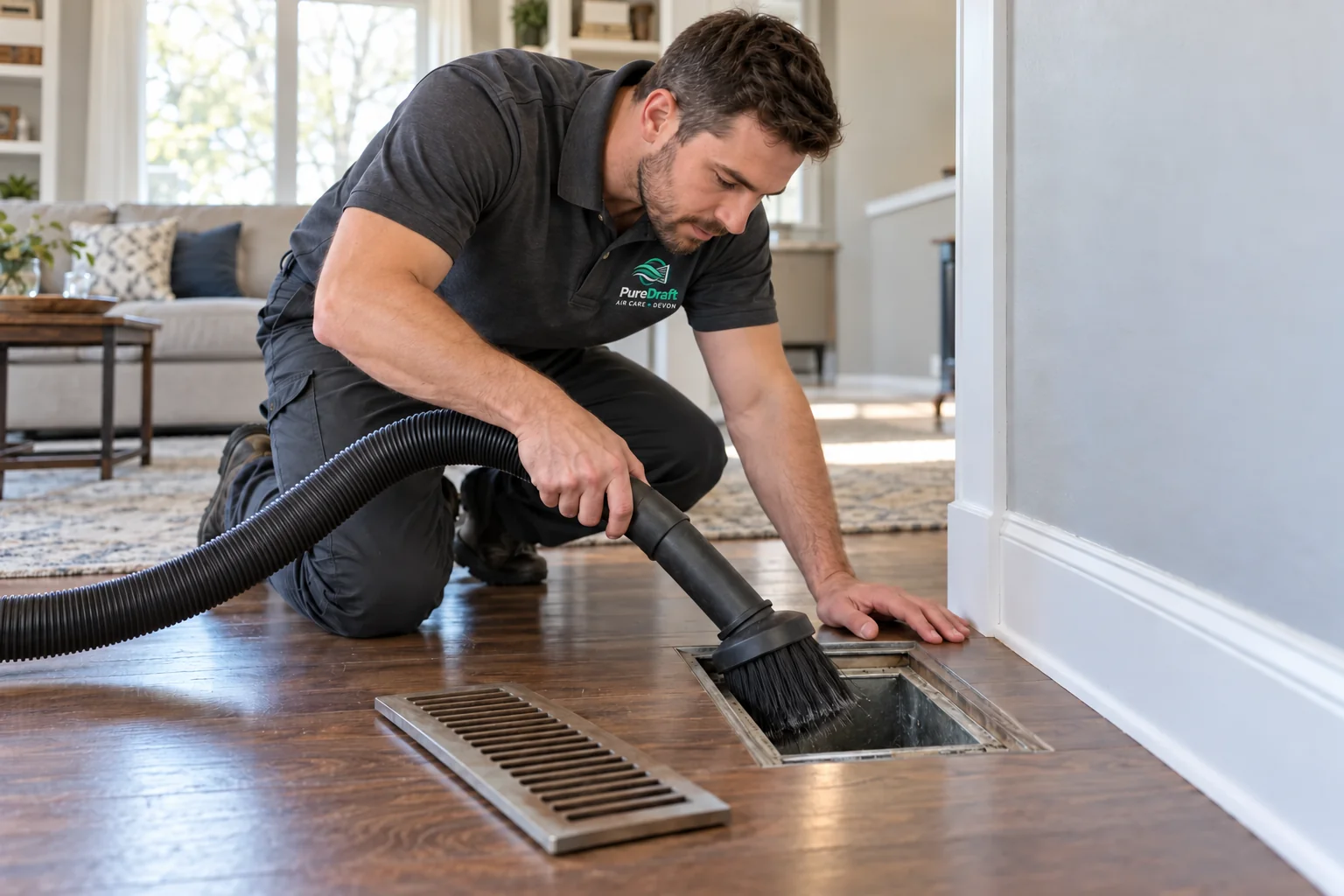
In a home, the layout may include one or more air handlers, returns near living spaces, and supply registers in bedrooms or other rooms. A homeowner can help by pointing out the thermostat, filter slot, equipment access, and rooms where the concern is most noticeable. Furniture near a return, delicate belongings, pets, and household schedules may affect how the work area is arranged. It is reasonable to ask whether all rooms need access, how grilles are removed, and whether anything should be moved before the appointment.
Residential customers may ask if cleaning will cure allergies or remove every odor. No single cleaning can guarantee a health outcome or eliminate dust sources inside a home. It also does not fix a wet basement, a gap in the return path, an unsuitable filter, or a damaged duct. If the concern is visible biological growth, moisture must be investigated and corrected; cleaning alone does not resolve the underlying water source. The EPA recommends evaluating duct cleaning by circumstance rather than following a universal schedule.
If a recent project left fine dust around supply grilles, note which rooms were worked on and whether the heating or cooling system ran during the project. If you see only a small ring of dust at one register, start by describing that specific area. Both observations help define a proportional response.
Commercial Air Duct Cleaning
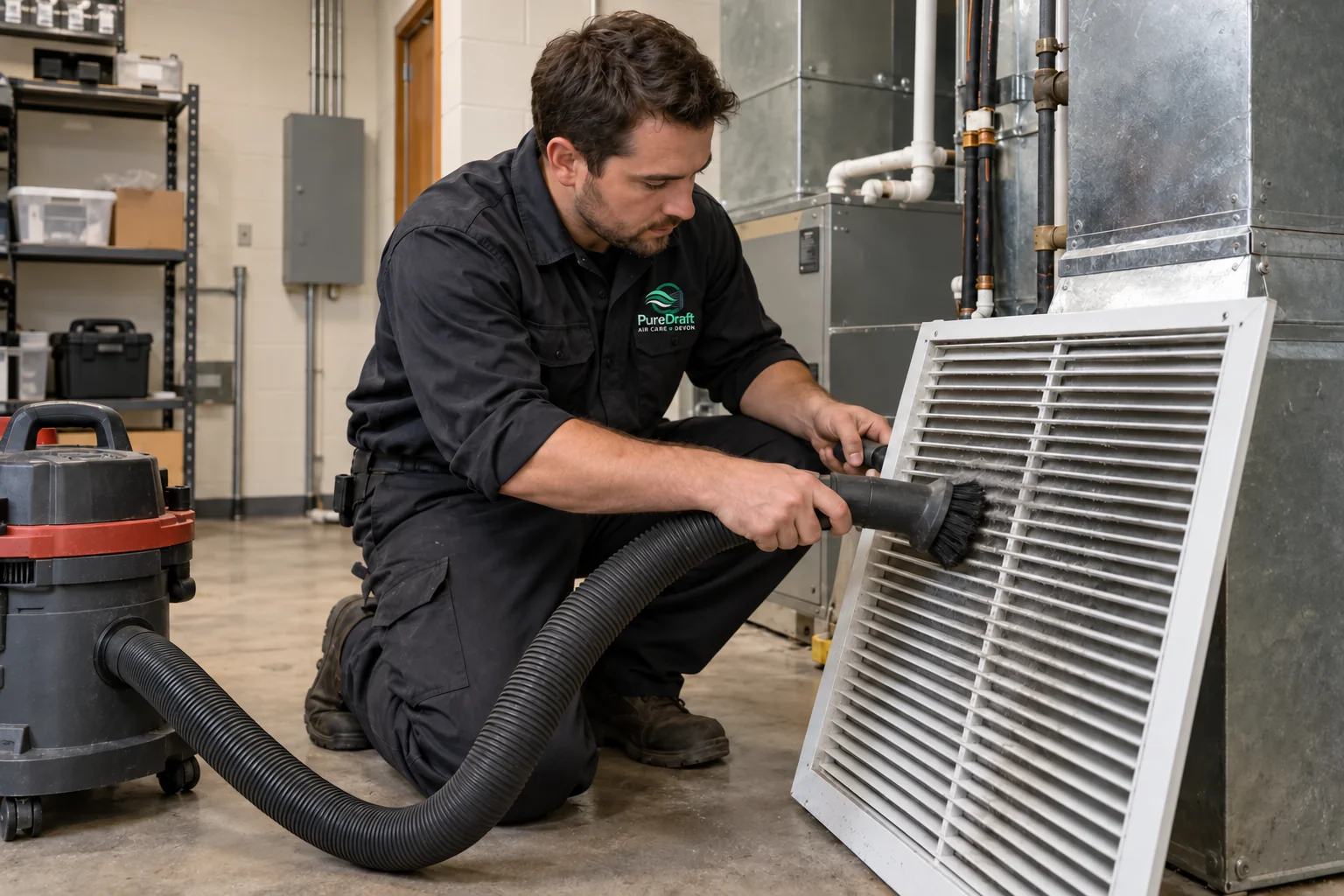
Workplaces can have shared equipment, multiple zones, longer operating hours, and access controlled by a manager or building owner. A restaurant, office, or shop may use ventilation in very different ways, so the system type and the permitted work areas should be established before anyone describes a cleaning plan. Tell us whether the property is occupied during the proposed work, who controls mechanical-room access, and whether a building manager has specific rules.
Commercial work may need coordination around occupied rooms, computers, displays, ceilings, and the operating schedule. Before a visit, gather any available plan showing air handlers and zones, identify the contact who can authorize access, and list rooms with specific complaints. Ask which equipment belongs to the property versus a shared building system. This is especially important when the business occupies only one suite. A proposal should state boundaries clearly rather than imply access to every duct in the building.
Cleaning can remove accessible accumulated material; it cannot replace ventilation engineering, solve a humidity source, or correct every temperature difference between offices. If a facility has an ongoing mechanical concern, the person responsible for the HVAC system should be part of the conversation.
How to prepare and what to ask
- Note the number of systems and where the equipment is located, if known.
- Clear safe access to grilles, returns, and the equipment area without taking equipment apart yourself.
- List rooms with visible buildup, odor, or airflow concerns and when those issues occur.
- Ask what components are included, what protection is used, and how limitations will be communicated.
- Tell us about pets, occupied work areas, access permissions, or fragile surfaces.
Cleaning is one part of maintaining a forced-air system. Filter fit and replacement, source control for dust, repairs to damaged runs, and professional evaluation of moisture or equipment problems may matter more in a particular property. Our FAQ explains related questions, and the dryer vent page covers a separate exhaust system. PureDraft Air Care Devon serves Devon and the confirmed communities listed on our Service Area page.