
Dryer Vent Cleaning Devon, PA
Understand lint accumulation, possible airflow restrictions, and why a dryer exhaust line calls for different care from a room HVAC vent.
A clothes dryer moves warm, moist air through a dedicated exhaust duct to an outdoor termination. The lint screen catches a substantial amount of fiber, yet fine lint can still collect in the transition duct, the longer exhaust run, and the exterior hood. Bends, crushed sections, long runs, and a flap that cannot open freely can make it harder for exhaust air to leave. A cleaning visit focuses on accessible buildup in that route; the condition and layout of the duct still matter.
Lint accumulation is a maintenance concern, not just a cosmetic one. When air cannot leave efficiently, drying can take longer and the appliance may feel hotter than usual. A dryer that suddenly changes behavior deserves attention, but symptoms do not identify a single cause. The lint screen, vent route, appliance condition, load size, and installation can all affect performance. Stop using a dryer that smells overheated, shows smoke, or seems unsafe and seek qualified help.
Possible signs of restricted exhaust flow
- Ordinary loads take noticeably longer to dry than they used to.
- Laundry remains hot or damp after a normal cycle.
- The laundry area feels unusually warm or humid while the dryer runs.
- Airflow at the exterior termination seems weak, or the exterior flap does not move freely.
- Lint collects visibly around the appliance connection or outside hood.
These are reasons to check the system, not a remote diagnosis. Exterior outlets may be high or difficult to reach; do not climb or dismantle a vent in an unsafe location. If you can safely identify where the line exits the building, share that information when asking about service.
What professional dryer vent cleaning can include
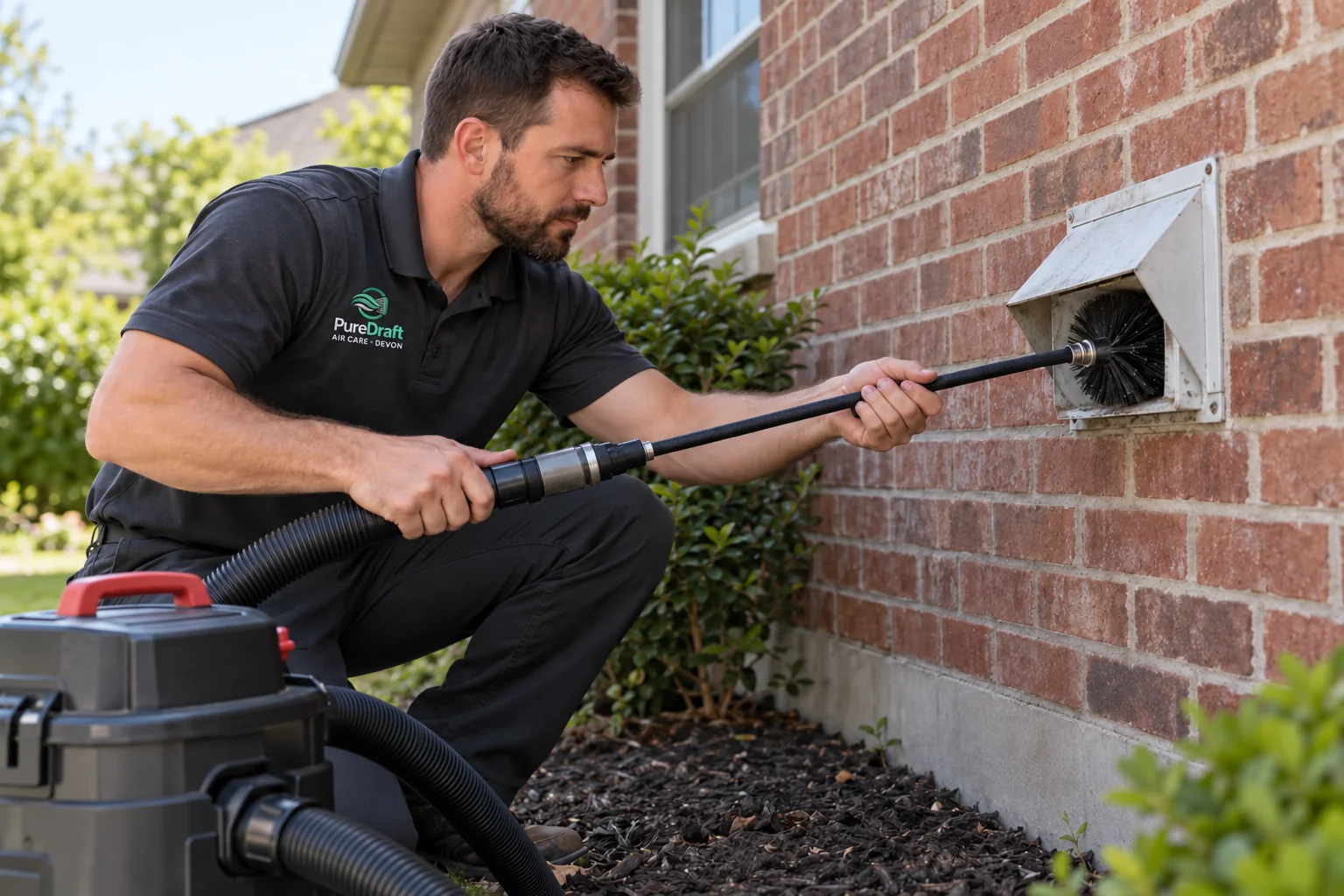
The process begins by understanding the appliance connection and the exhaust path. A technician can assess the accessible transition area behind the dryer, identify the exterior termination, and describe the planned cleaning approach. Suitable brushes and collection equipment may be used to remove lint from reachable sections without pushing a blockage into another part of the route. The exterior hood and flap can be checked for visible buildup or interference where safely accessible. The connection should be restored securely before normal use.
Some exhaust runs are concealed, unusually long, damaged, or routed to difficult exterior locations. Cleaning does not repair a crushed duct, replace an unsuitable material, or correct a termination that was installed incorrectly. If the line appears damaged or inaccessible, the next step may require a repair or a different specialist. Ask how the path and any limits on access will be explained before work begins.
Preparing the laundry area
Move baskets and stored belongings so there is a practical path to the dryer and a safe area behind or beside it. Make sure a person who can provide access is present. Let us know if the appliance is stacked, recessed in a tight closet, located upstairs, or connected to a shared laundry installation. If you know whether the exhaust goes through a wall, roof, or another route, mention it; uncertainty is fine. Do not pull a gas dryer away from its connection or disconnect any appliance yourself just to prepare.
For a multifamily building or shared laundry, confirm who has authority over the appliance and vent route. The duct may pass through common areas or terminate where building permission is needed. An estimate discussion should identify the equipment and access that can actually be included rather than assume every dryer uses the same layout.
Maintenance between visits
Clean the lint filter as directed by the dryer manufacturer, and keep the area around the appliance clear of loose lint and items that block ventilation. Periodically look at the exterior hood from a safe location while the dryer runs, if it is accessible. A flap that sticks, a pile of lint outside, or a new change in drying time is useful information to report. The U.S. Fire Administration advises cleaning lint filters and dryer vents as part of dryer fire safety. The right service interval for a particular exhaust line depends on use, route, and condition rather than a promise that one schedule fits everyone.
HVAC Vent Cleaning: a different airflow path
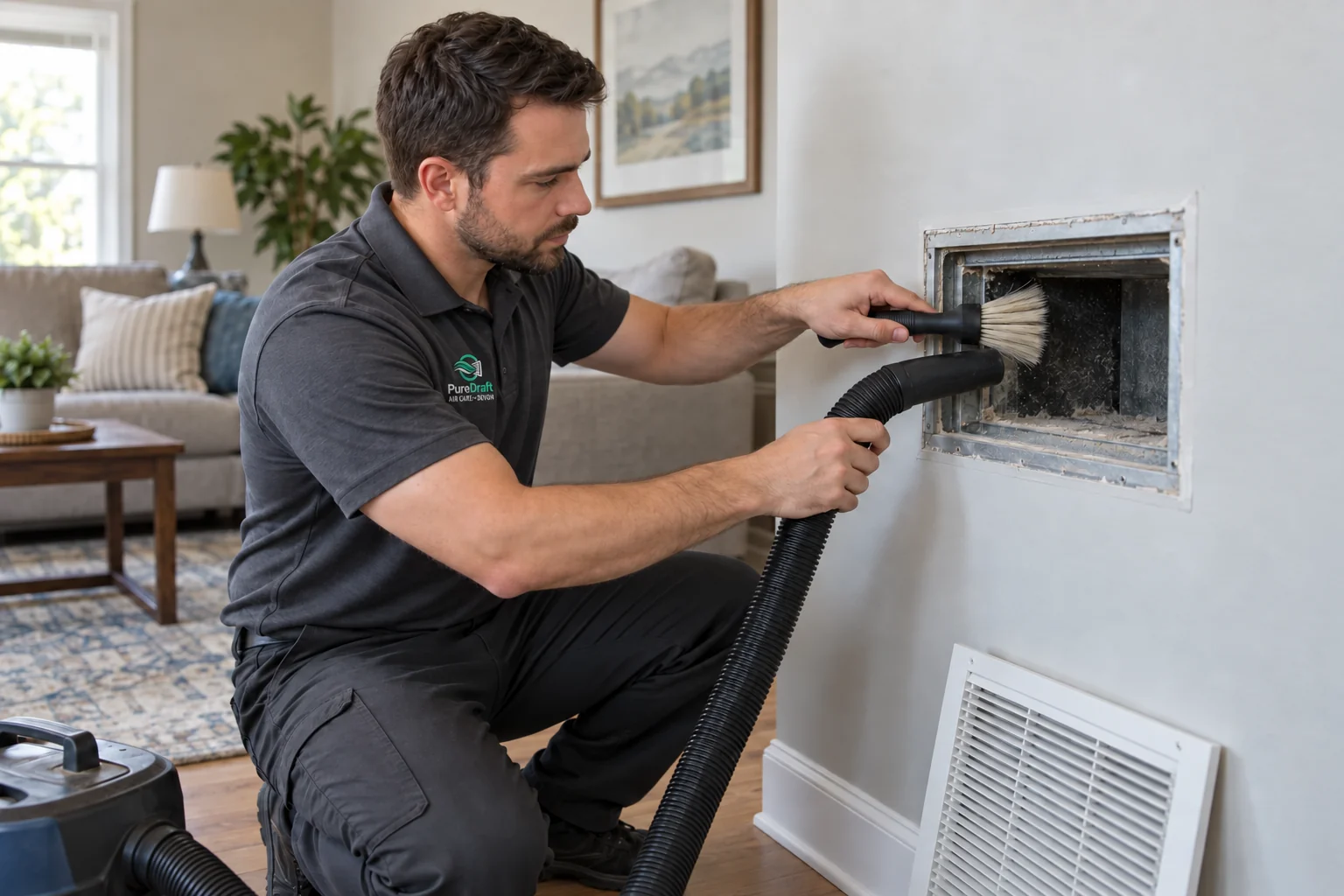
A room HVAC vent is part of the heating and cooling air distribution system. It may be a supply register that blows air into a room or a return grille that draws room air back toward the equipment. Its visible face and accessible opening may collect dust. Cleaning a register, grille, and reachable adjacent surface can address local buildup, but that is not the same as cleaning an entire duct system. The scope should distinguish a local vent visit from the broader air duct cleaning service.
A dryer exhaust vent carries lint-laden, humid air outdoors and should terminate outside. HVAC supply and return vents circulate conditioned building air through a separate system. The tools, connection points, material being removed, and questions about safe access therefore differ. A room grille with dust does not imply a blocked dryer line, and a slow dryer cannot be fixed by cleaning an HVAC register. If you are unsure what you are looking at, send a photo of the accessible opening and explain which appliance or system seems affected.
For an HVAC vent, note whether dust is on the grille surface, at the immediate opening, or appearing repeatedly after wiping. Check the filter's location and whether furniture obstructs the vent. A damaged duct or a mechanical airflow issue is outside the limits of surface cleaning. For a dryer, focus instead on drying performance, the appliance connection, and the exterior exhaust route. Keeping those two paths separate helps you ask for the right service.
Questions worth asking before scheduling
- Where does the dryer exhaust terminate, and is that outlet safely accessible?
- Will the visit include the appliance connection, accessible exhaust run, and exterior hood?
- How will lint be captured and the duct reconnected?
- Is the concern about a dryer exhaust line or a room heating and cooling vent?
- What will happen if a duct is crushed, disconnected, or inaccessible?
PureDraft Air Care Devon serves Devon and the confirmed communities on our Service Area page. See the FAQ for answers about preparation and scheduling, or contact us with the property details so we can discuss the next step.